☀️ The Sun Room
Welcome to the bright side! Watch our Sun in near-real time and explore the powerful beauty of its surface. 🔥
🎥 Live Sun Feed
☀️ Live Solar Observatory Feed
Images from NASA’s Solar Dynamics Observatory (SDO) — refreshed every few minutes.
🔆 Latest Solar Image (SDO/AIA 304 Å)
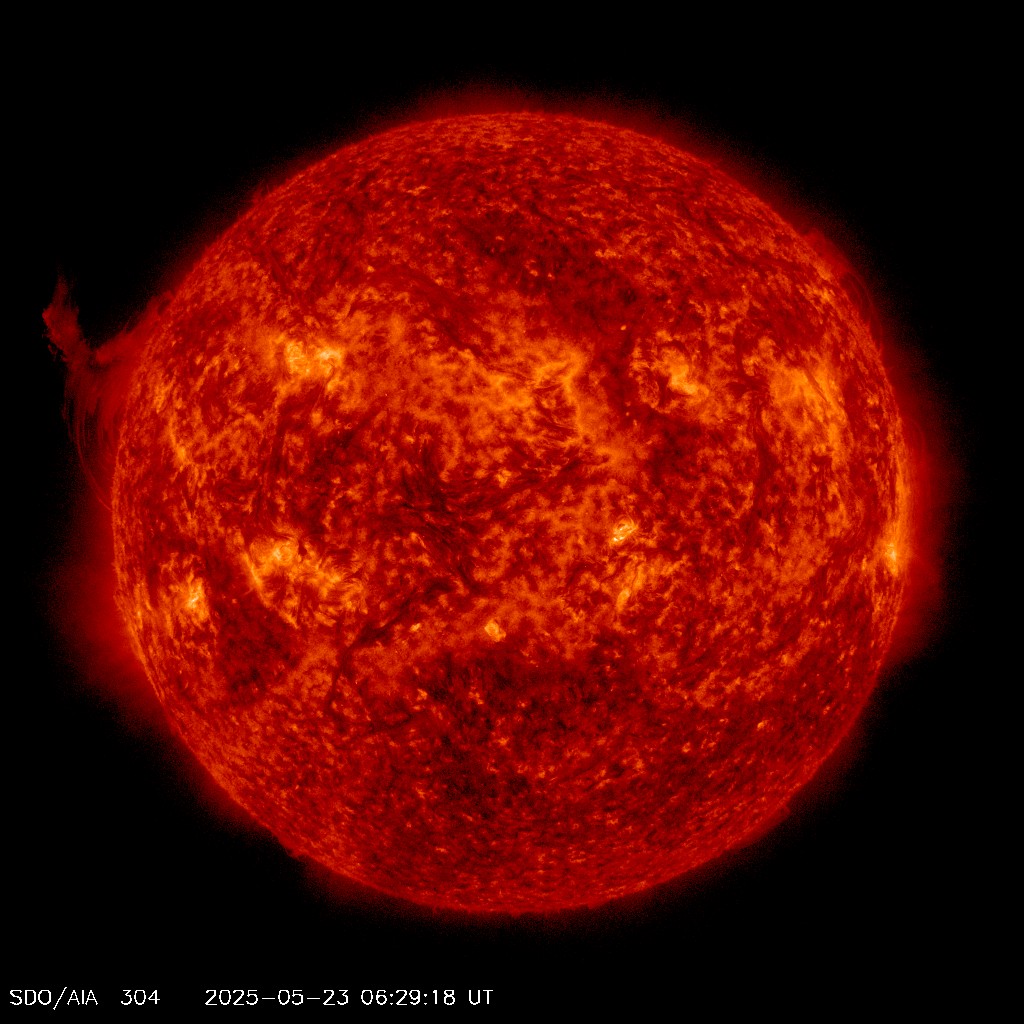
Source: NASA Solar Dynamics Observatory (AIA 304 Å)
🧭 Explore the Sun in 3D
Interactively explore the Sun with NASA’s Eyes on the Solar System — zoom, rotate, and view our star from every angle.
Source: NASA Eyes on the Solar System
☀️ Helioviewer: Compare the Sun and Earth
Open NASA’s Helioviewer to explore the Sun interactively and compare its size with Earth.
Opens in a new browser tab
Solar Video Highlights
Explore moving views of the Sun through our Astronomy Watch YouTube channel. Click any preview to start the video. Fullscreen viewing is available from the player controls.
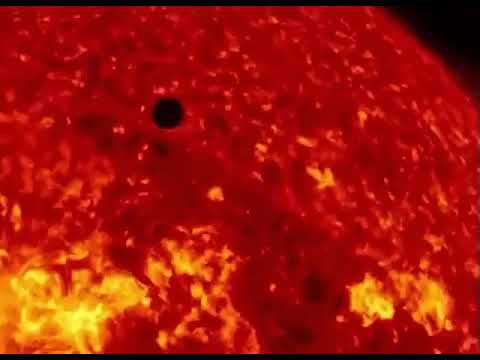
Solar Wind
April 4, 2026 — The Sun continuously releases streams of ionized particles known as the solar wind. Traveling at speeds of up to 800 km/s near Earth, this flow of charged particles shapes space weather throughout the solar system.
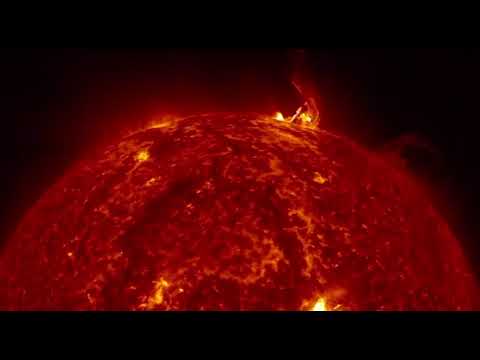
Solar Dynamics Observatory
Captured by NASA’s Solar Dynamics Observatory, this footage reveals the Sun in remarkable detail, showcasing its dynamic and ever-changing atmosphere.
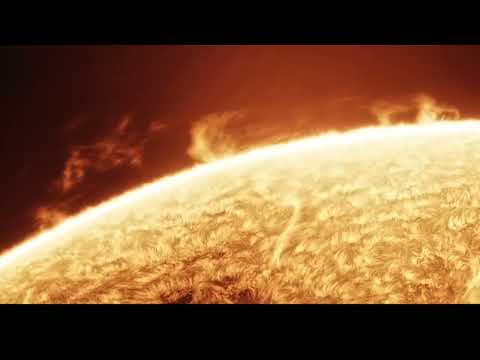
Solar Surface Detail
A high-resolution view of the Sun’s surface recorded over 2.5 hours, highlighting the complex motion and structure of solar plasma.
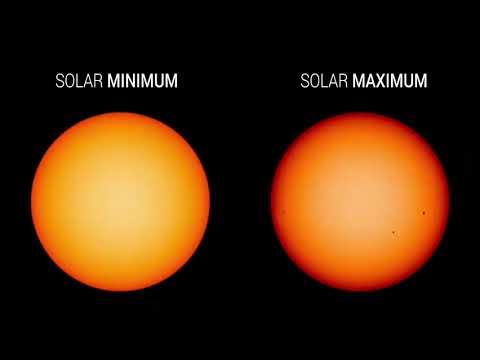
Solar Activity
The mystery of solar activity cycles has been solved: it’s about the influence of planets. For the first time in history, scientists have proposed a coherent theory explaining the strange cycles of solar activity. According to this theory, the cause of the cyclical fluctuations in the behavior of our star must be sought not inside it, but outside. The gravitational influence of the planets surrounding the Sun determines the processes taking place on its surface — just as the Moon causes tides and ebb on Earth.
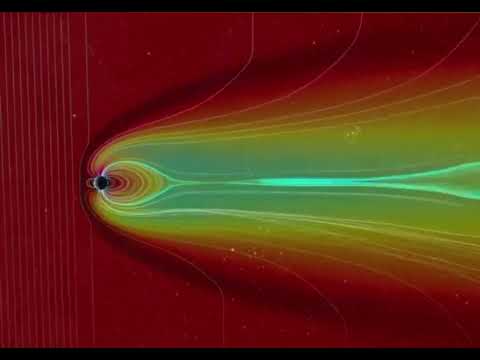
Solar Storm
The Carrington Event was the most powerful solar storm in history. In 1859, the Earth was hit by the strongest geomagnetic storm ever recorded. It was named the Carrington Event. The cause was a coronal mass ejection (CME). The cloud of solar plasma reached the planet in just 17.6 hours, whereas it usually takes 2-3 days. The storm caused bright auroras, telegraph failures, electric shocks to operators, and explosions at stations. If such a storm were to occur today, satellites, communications, the internet, and power grids would be affected.
Solar Shorts
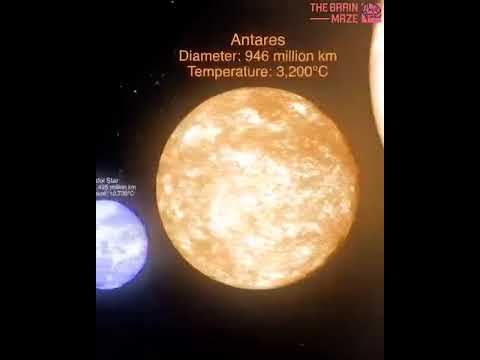
Star Size Comparison
An animation comparing the sizes and temperatures of known stars, revealing the immense scale of stellar giants beyond our Sun.
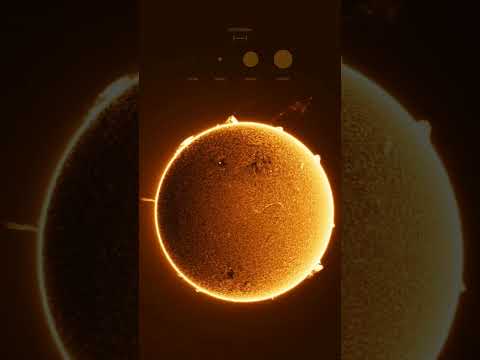
A Giant Solar Prominence
A giant solar prominence.
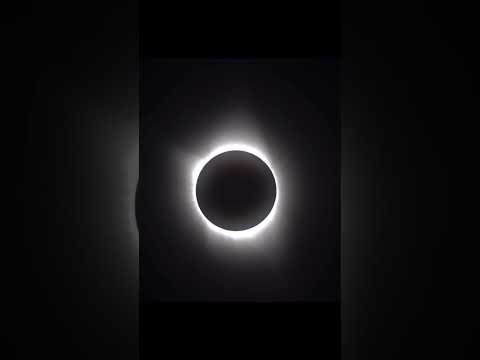
Total Solar Eclipse 2017
A video of the total solar eclipse, filmed in 2017.
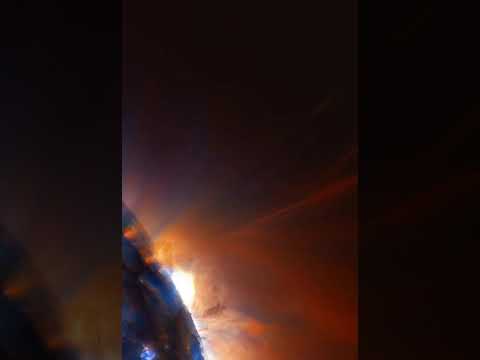
Corona Discharge
NASA’s Solar Dynamics Observatory (SDO) was specifically created to study the Sun’s influence on Earth. The video, captured by the observatory’s instruments, shows a coronal mass ejection.
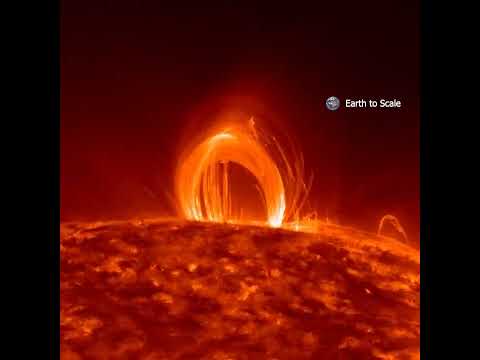
Plasma Loop Sun
Loops of superheated plasma larger than Earth, captured by the Solar Dynamics Observatory spacecraft.
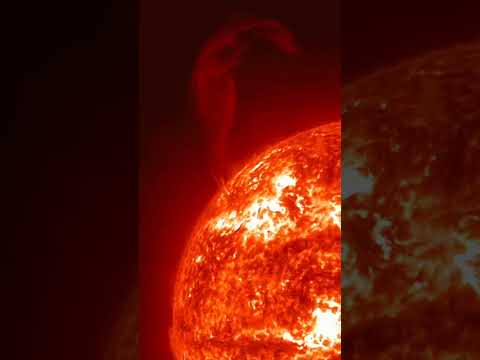
Plasma Cloud
Plasma ejection from our Sun, captured by the geostationary satellite GOES-16 on February 27, 2025.
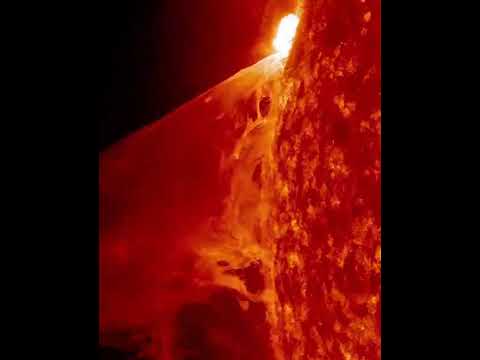
Sun Discharge
Every year, the Sun ejects about 180 trillion tons of its own matter into space. However, this is only about one trillionth of a percent of its mass. More massive stars, as well as stars in the late red giant stage, lose mass more actively: their mass loss can reach 0.01% per year.
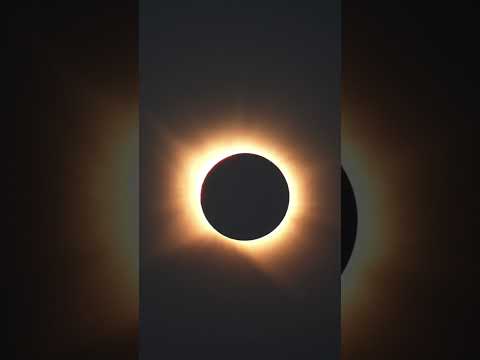
Eclipse 2026 Spain
Eclipse 2026 Spain.